
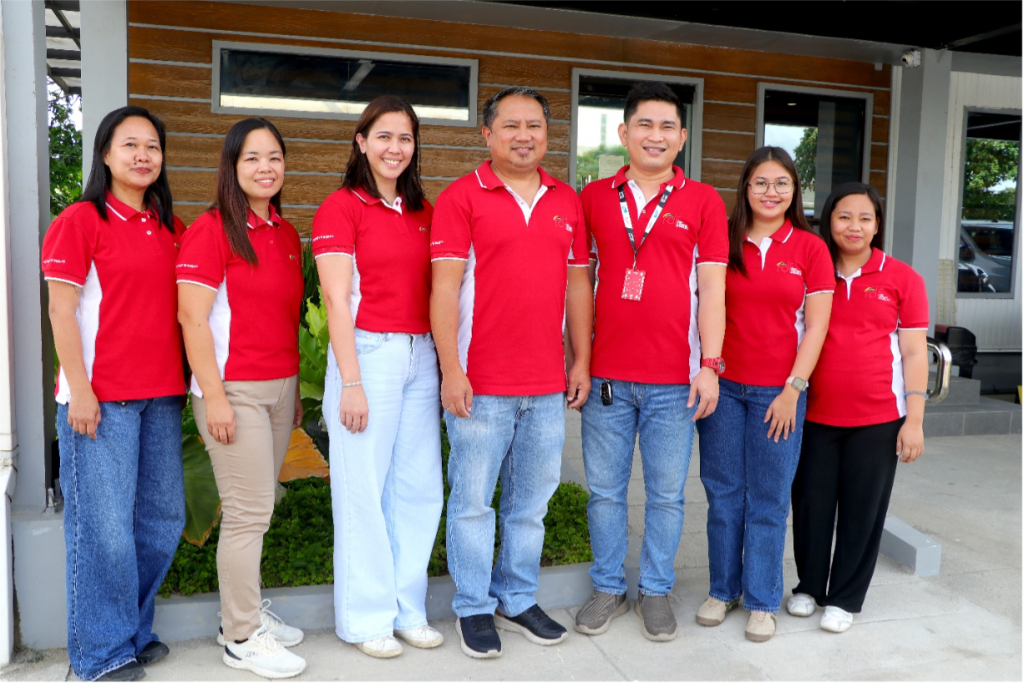
Trust is a value present at every Filipino family’s table. RDF Feed, Livestock & Foods, Inc.
supports this by providing safe, fresh meats that families can rely on. Through responsible
farming, RDF gives customers confidence—at home and in every Fresh Options store.
This care involves attention at each stage—from animal health and welfare to responsible
resource use and strict food safety. These practices are part of daily operations, ensuring that
every product meets RDF’s standards.
Operating in Central Luzon, Philippines, RDF handles all production stages in-house, from feed
milling and animal raising to processing and distribution. This integrated approach keeps a
consistent level of care and accountability throughout, providing families with reliable products.
Feed Mill: The First Step in Food Safety
Food safety begins at the feed mill, serving as the foundation of RDF’s integrated system and
guiding the next steps in responsible farming.
The feed mill manufactures and delivers high-quality, tested feed only to RDF farms, reducing
the risk of cross-contamination. All ingredients and additives are approved, and growth
promoters are not used, preparing the way for careful animal care.
Broilers and pigs are fed diets containing up to 60% corn, plus amino acids, enzymes, and
antioxidants to support health and reduce antibiotic use. Modern silos maintain a steady feed
supply year-round.
Veterinarian-Led Farm Management
A team of veterinarians manages biosecurity, vaccinations, medications, health checks, and
genetics. In cooperation with farm managers and nutritionists, they monitor animal health and
maintain proper farm conditions. Staff are trained and paid fairly, reinforcing the culture of
malasakit (genuine care) that shapes RDF’s farm management.
Protecting Consumers: Responsible Antibiotic Use
Improper antibiotic use can lead to antimicrobial resistance (AMR), which may be transmitted
from animals to humans. RDF uses antibiotics only when needed and always by veterinary
prescription, reflecting a careful approach to animal health and consumer safety. Strict protocols
control dosage and treatment time, and withdrawal periods are observed before any animal or
product enters the food supply.
Dr. Ronald Dizon, Swine Operations Manager, shares: “We use a first-in, first-out approach. We
closely track expiration dates, lot numbers, storage, and antibiotic use. To combat resistance, we
choose antibiotics with low minimum inhibitory concentrations (MICs)—the lowest amount
needed to stop bacteria.” Every use is precisely recorded.
This careful approach applies to both swine and poultry, maintaining the same standards across
operations.
Dr. Fabienne Luz Balucas, Operations Manager for poultry, follows strict protocols. All
treatments and vaccines are carefully documented. Vaccination, balanced nutrition, and targeted
supplements maintain flock health. Antibiotics are given only when required.
RDF checks meat for antibiotic residues at slaughter, and the National Meat Inspection Service
(NMIS) oversees quarterly testing. This extra step boosts the company’s food safety measures
and makes results and certifications available upon request.
How Smart Housing Keeps Broilers Healthy
The company runs 13 broiler farms in Pampanga, Tarlac, and Pangasinan. Good housing is key
to RDF’s system. Dr. Balucas notes that poor housing increases stress and lowers meat quality,
while smart housing helps avoid these risks and keeps birds healthy.
Around 65% of broiler houses use climate-controlled ventilation to manage temperature,
humidity, and airflow, creating a stable setting for the birds. The “no brooding concept” replaces
heaters with energy-rich feed and focused climate control to protect chicks from cold stress from
day one.
Broiler houses use an “all-in, all-out” system, meaning whole flocks enter and leave together to
control disease. Between cycles, houses are cleaned and disinfected, and rest periods are
observed before new birds arrive. Sick birds are promptly isolated to protect the flock and
maintain production from healthy animals only.
A Fully Integrated Approach to Swine Production
The swine program covers five farms in Central Luzon. Every phase, from breeding and
farrowing to grow-out and fattening, is managed in-house. RDF supervises genetics, nutrition,
health, and welfare from birth to slaughter, ensuring a reliable, traceable pork supply.
A nucleus breeder farm in Tarlac leads the genetics program, improving sow quality and
producing healthier pigs each generation. High-standard housing and a structured system protect
animal health from the start.
All buildings are enclosed, bio-secure, and climate-controlled to reduce stress and disease.
Automated feeding increases efficiency, and specialized equipment helps detect African Swine
Fever (ASF) early.
Farms use a two-site system, with breeding and birth at one location and grow-out at another,
which helps reduce disease, improve efficiency, and support food safety. Animal welfare matters
to meat quality—stress can harm both. Custom vaccines, regular checks, and quick disease
testing keep herds healthy, while sick animals are promptly isolated and treated to maintain
standards.
Biosecurity: A Non-Negotiable Line of Defense
Strict biosecurity at every stage is key to RDF’s goal of protecting consumers through safe,
humane, and responsible practices.
In broiler operations, only authorized staff can access the farm. Everyone is required to shower
and change into farm-issued clothing before entry. Visitors follow strict disinfection procedures
for vehicles and equipment. Staff vaccinate birds and monitor chick health at all stages to prevent
diseases such as Newcastle disease, infectious bursal disease, infectious bronchitis, and
coccidiosis.
Swine biosecurity includes in-house disease checks and strict entry rules. All personnel and
visitors must shower and change into farm-issued clothing before entering the facility. Outside
animals are quarantined to prevent diseases such as ASF. Silo downtime keeps feed silos empty,
stopping the ASF virus from spreading between cycles.
Caring for the Environment in Farming
Broiler facilities are designed for efficient manure collection and fly control, which lowers
disease risk. Modern manure management and a biogas system turn waste into renewable energy,
combining sustainability with practical waste solutions.
Swine operations use a dedicated plant to treat waste, stopping untreated materials from reaching
the environment.
Both poultry and swine operations comply with all local environmental regulations. Legal
compliance is just the start—RDF invests in biogas, advanced manure management, and
wastewater treatment, demonstrating a strong commitment to sustainability across its farms.
Farms are BAI-certified for Good Animal Husbandry Practice. Assessments are conducted every
two years to verify compliance with welfare, food safety, and sustainability standards.
Certification renewal is ongoing.
Meeting the World’s Highest Food Safety Standards
RDF’s meat products are protected by strict food safety standards from farm to processing,
ensuring the company’s care extends throughout the process.
The feed mill, once ISO 9001:2015-certified, continues to undergo regular audits to maintain its
quality management system.
Pork products are HACCP-certified, following the Hazard Analysis and Critical Control Point
(HACCP) system, an internationally recognized approach to managing food safety risks. Both
the slaughterhouse and the meat-cutting plant, which are Class AAA, meet FSSC 22000
standards for international food safety. FSSC 22000 assures families that facilities adhere to high
global food safety standards throughout processing and distribution.
These recognitions highlight the company’s dedication to meeting rigorous global food safety
requirements across its operations and reinforce the standards outlined above.
RDF is always working to improve. Every update, training, and new technology strengthens its
commitment, ensuring Filipino families receive safe, high-quality meat and that trust remains
strong throughout the process.
Responsible farming is more than a process; it’s a legacy of trust and care, connecting farm to
family and one generation to the next. Guided by food safety, animal welfare, and environmental
responsibility, RDF delivers safe, fresh meats that nourish Filipino families and support a
brighter future.